
51 Books in 2024

2024 was absolutely BONKERS. Ian and I both got new jobs (I actually moved to a company that had been my dream to work at for so long!), we moved out of our house for a handful of months due to a home renovation, we dug out and underpinned our basement, and of course had many children’s activities and LIFE. At one point we slept under 6 different roofs in 2 countries within 3 weeks as we waited to move back into our house (shoutout to my sisters, mom and Flem/Paul for their homes during this time of upheaval!). And while my goal is always 50 books a year (in 2023 I hit over 70 and I really don’t know how), I try not to look at my tally because I never want it to feel like an assignment, or for the joy of reading to be sucked out of me by monitoring the number. I read what I like, when I want to read. Bottom line.
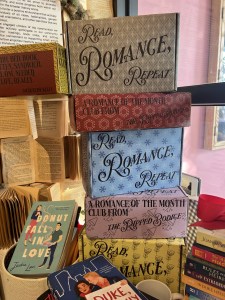
This year, despite the chaos, I was pleasantly surprised to see I scraped by my goal, coming in at 51 books. I don’t review books on the blog the same way I used to pre-kids, but love to do a year roundup of the books most-worth mentioning from the year. I hope this post helps direct you if you are ever in need of a good read, or on the fence about dabbling in a book you have had on your TBR list for a while. I have also scattered some photos throughout the post from some of the coolest bookshops I visited this year, from New York to L.A. From The Ripped Bodice to Book Bar, it was so inspiring to see independent bookshops, and bookish bars and cafes busy and thriving.
Alright, alright, enough of the yammering. Onto the good stuff….

Favourite Book of the Year: The Women, by Kristen Hannah. Wow, this book got me. I laughed, I cried, I reflected. I’m sure many of you have already read this book, or at least heard of it, and I highly recommend it if you haven’t. This novel’s time span takes place over many years, and follows an American female nurse to the Vietnam War. But the stories don’t stop at the war; the narration follows her home post-war. It follows her relationships, her PTSD, and describes eloquently what it meant to be a woman AND a woman veteran throughout her life. The research Hannah must have done to tell this story so believably is mind blowing, and I find myself– despite having finished the book a few months ago– still thinking about the stories and characters often. The sign of a brilliant book.
Book I’m Still Scratching My Head On: All Fours, by Miranda July. The plot of All Fours is described as “A semifamous artist announces her plan to drive cross-country, from LA to New York. Twenty minutes after leaving her husband and child at home, she spontaneously exits the freeway, beds down in a nondescript motel, and immerses herself in a temporary reinvention that turns out to be the start of an entirely different journey.”
All Fours won the Good Reads Choice Award (despite its 3.67 rating on the platform), among other prestigious awards and accolades, and came recommended.
What I liked about it: All Fours was progressive and modern, and it discussed perimenopause in a way I previously have never read it described. It was also a story with scenes that made me uncomfortable at times, which always leads to some introspection.
What I didn’t like about it: All Fours felt like it was trying really hard to dive into a couple different “hot topics” and in doing so, failed to keep me invested in any of them. I wasn’t rooting for the main character- which is fine- but of course I always find an unlikeable, unrelatable protagonist has to work a lot harder to keep me invested. And the funny thing is, I do think that July’s objective was to make the protagonist relatable, at least partially. I also found a few of the scenes gratuitous (for those who have read it- “the bathroom scene”- you know which scene I’m talking about!) and an image or two will remain in my brain for a while to come. If you have read this book, please message me. I do think that book clubs covering this book could discuss it for HOURS upon reading it!

Most Captivating Memoir: Dinner with Vampires, by actress Bethany Joy Lenz. This one was a DOOZY! I never watched One Tree Hill, the show in which Lenz starred in for many seasons, but I was so intrigued by Lenz’s memoir because of the cult element. (Spoiler alert: she was in a cult!) It did NOT disappoint. I recommend this book to all those who find cults fascinating like I do, and especially recommend the audiobook. Lenz reads her story with warmth, sadness and everything in between.
Most Disturbing Memoir: A Well-Trained Wife, by Tia Levings. Immediately following Dinner with Vampires, my audiobook algorithm suggested A Well-Trained Wife. I was clearly on a cult-kick so I drove right in, since the author describes what it was like to live in a Christian Fundamentalist lifestyle, with a husband with extremist values. This book was VERY disturbing. A Well-Trained Wife follows Tia Levings, a well-known blogger, mom and wife, as she offers offers a horrifying and enlightening glimpse into her rocky marriage (to say the least) and her escape from the most toxic environment, relationship, community and Fundamentalist Christian religious leaders. A NYT Bestseller, the Audible Canada Best of Year 2024 and a Goodreads Readers Choice Award finalist, this book is not for the faint of heart; it will take you on a rollercoaster of hopelessness, sadness, angst, disbelief, anger, betrayal, and relief. Levings is smart, brave and strong-willed, and I’m glad to have read her story. (Note: there are a number of trigger earnings in this book, so read with caution).

Honourable Mention Memoirs:
If You Would Have Told Me, by John Stamos
Best Thriller: The Housemaid, by Frieda McFadden. This book was very disturbing, and well-executed. There were a couple of squeamish scenes where I was physically cringing while reading, but for the most part this is a pretty tame commercial thriller with a twist. The Housemaid is being made into a movie with Sydney Sweeny, so I’m looking forward to seeing how it plays out on screen! (This is Book 1 of a larger series, which I didn’t realize until I finished the novel).

Best Fae Story (yes, making this a category at this point for my fellow fantasy lovers!): The Courting of Bristol Keats by Mary E. Pearson, author of The Remnant Chronicles series, which I reviewed here. This novel is the first in a duology, and boy was I excited to see Mary E. Pearson back! Both of Pearson’s other series are two of my favourites within the fantasy realm, and her latest story didn’t disappoint! Pearson offers a fun twist on the land of the fae with Gaelic roots, and the protagonist’s arch with herself, her father, and her love interest are all equally compelling. I’m very much looking forward to the final book in this duology!
Favourite New Fantasy Series: The Powerless Trilogy by Lauren Roberts (Books 1 & 2, plus a novella are currently released, the the third book in the series comes out later this year). These books are The Hunger Games meets Kiss of Deception– class wars, enemies to lovers, sibling rivalry, competition, and royalty. This series will keep you on the edge of your seat with a slow burning, intense love story, witty banter, compelling B characters, and action-packed sequences for survival.
Fantasy Series Honorable Mentions: Swordcatcher, by Cassandra Clare (her first Adult Fantasy) and The Witch Walker series, by Charissa Weaks.
Favourite Business Book: No Rules Rules: Netflix and the Culture of Reinvention, by Reed Hastings and Erin Meyer. This book was a necessary, inspiring read in my career development and I remain in awe at the unique policies, refreshing autonomy and progressive thought leadership that Netflix inspires in its employees.

Honourable Business Book Mentions: Exit Interview by Kristi Coulter
Favourite Romance: Funny Story, by Emily Henry. I read two Emily Henry books this year, Funny Story and Happy Place. Funny Story was so sweet and endearing, and was a lovely comedic romance. The story begins with the introduction of two broken roommates finding themselves- and love! – again. I think this may have been my favourite of all the Emily Henry books, as I really enjoyed the characters, the pace and ultimately, the story.. (Happy Place was enjoyable until the end, which fell flat for me and left me annoyed— I wasn’t convinced at the path the main character took as the story came to a close— but I don’t post spoilers on the blog unless otherwise indicated, so my lips are sealed beyond that!)
Honorable Romance Mentions:
The Idea of You by Robinne Lee
This Summer Will be Different by Carley Fortune (Canadian!)
Best Middle Grade to Read Alongside the Kiddos: Land of Stories, A Grimm Warning (Book #3), By Chris Colfer. (Yes, that Chris Colfer!) Gosh, this series is such a gift. My oldest son and I have loved reading this fairy tale-based series together. The Land of Stories series is about a pair of twins who fall into their grandmother’s storybook and discover that the fictional characters they grew up reading about actually exist in another land. Throughout this series we have laughed, cried and remained on the edge of our seats. It’s such a nice, heartwarming series for parents and kids to read together that can grow with the children as they read it, and leaves a lot of room for bonding and discussion.

Best Middle Grade Novel to Read Alongside the Kiddos Honourable Mention: Percy Jackson, by Rick Riordan.
Best Parenting Book: Raising Good Humans: A Mindful Guide To Breaking The Cycle Of Reactive Parenting And Raising Kind, Confident Kids, by Hunter Clarke-Fields MSAE and Carla Naumburg PhD. As I usually do with an informative, educational nonfiction book, I keep notes in my phone and like to include them on the blog so you can get a sense of the book. Here are my notes (skip to the end if this doesn’t interest you!):
- Kindness from the inside out: note when we are judging: a good step. Noticing this- turns on our mindfulness practice. It helps to stop the judging when it emerges.
- Harsh judgement zaps their self-confidence.
- Our minds are constantly judging. And that’s normal.
- Children who act bad, feel bad.
- Too often we don’t take our kids suffering seriously. And then our little ones feel overlooked and unimportant.
- Approaching “bad behavior” with empathy instead of judgement and impatience, this will help conflicts and solutions going forward.
- Go forward with curiously instead of judgement.
- Empathy is our parenting superpower. Empathy helps us to become more connections with our children.
- Making self-care a priority is a right and our responsibility. This helps lead to us to become able to be empathetic.
- Patience: take a moment of pause. A few breaths. What is really happening in the present moment? Five minutes late is not a big deal.
- When we can summon some patience, things end up going more smoothly.
- Practice being patience with yourself to then reflect on your kids.
- Patience mantras: “I help my children most when I am calm” put them on Post-It Notes around your house. “When the kids start yelling, I get calmer,” “I can pause,” and “Breathe.”
- Give yourself room to have these experiences.
- We don’t need to fill every moment with structured time. Downtime is a good thing.
- We have been trained since childhood with goal setting and achievement. ‘Striving’ is a blocker in meditation – let go of striving. Be present with the way things are right now. Show up and let go of the outcome. Let go of our agendas and let life unfold. Give kids space to just be. Apply ourselves but let go of the outcome; stiving causes anxiety for kids.
- Struggles help children develop resilience.
- Uncomfortable feelings mean that some self-action needs to take place.
- Don’t blame – accept your emotions. Feel all the feelings so they can be released in a healthy way. Check your environment before you process difficult feelings.
- Conflict: 1- Who’s problem is this? 2- Who’s need isn’t being met?
- Start to ask yourself: Who’s problem is it? Then start to think of yourself as a mentor and guider. Think of yourself as an empathetic helper, remove judgement and respond thoughtfully- but not as a problem solver. Let your children “own” their own problems.
- The greatest gift we can give our children is listening and being fully present. If we aren’t able to listen or only can half-listen because we are doing something in our phone or busy with something else, let them know that you can’t fully listen to them in that moment and need a few minutes. All children want for us is to be present and understand them- and their emotions- completely. Practice not talking or responding- just actively listening
- Don’t deny how the person feels or make a suggestion on a solve. These create barriers and make it hard for children to open up and be honest. Don’t blame, name call, threaten, ordering “stop doing that”.
- Example response: reflective listening: “Oh buddy, you are feeling really bad. That doesn’t sound very fun at all right know.” Reflective listening allows us to guess as to how a person is feeling; this helps the children’s upper brain (logic) back into the picture. This is reflective and emotional coaching. Then, Action. Focus and listen to facts and feelings. Share your understanding. Children can feel accepted or can help clarify how they were feeling.
- Blaming and name calling will cause resentment. They are “put downs.”
- Connection will make child want to collaborate or listen, and Blaming and Name Calling puts a long-term dent in this. Advising and Ordering sends the message that you don’t trust your kid to do it themselves. Barriers are ineffective and makes them less likely to cooperate longterm. Barriers will also cause resentment.
- Same with the word “You.” A better way to speak is: to shift our language, we need to shift our intention. Skillful confrontation. “I” rather than “You.” It helps us take ownership of our own feelings and needs. It’s more respectful without attacking or blaming. It also implies that our feelings are our own. “I feel discouraged when I see this big mess.” “I feel stress when I have to hurry.” How does this situation make me feel (as a parent.). Our statement now offers empathy. Our child wants to help because they want to, not because they are ordered to.
- Punishment causes resentment. They learn to resent punishers. Yelling can have long lasting impacts on kids. Yelling makes kids more self-centered long-term. Punishment teaches children how to lie and blame. The child identifies you as the cause of suffering. Punishment makes children more likely to be self-centered because they are worried about punishment and that is the surface level solution
- Actionable items for problem solving: Write out your needs and solutions, and your child’s needs and solutions. Clarify the needs “what will that do for you.” Child should offer all their ideas first. Don’t evaluate even if they are silly. Coach children to express feelings and articulate their needs i.e.) “I hear lots of yelling. You look really mad. I am not going to let you hit your brother. Can you tell him how you feel and what you are needing from him?” Then say: “Look at your brother’s face. He did not like that poking. I’m not going to let you hurt him. What are you needing right now?”
- When both children need you at once. Describe what is happening. “I have two upset children – come here.” If you are helping one child with their physical need, talk to the child with the emotional need while you tend to the other.
- We are in their corner:
- Positive mentorship, healthy boundaries, strong limits, physical touch.
- Use “I” messages.
- Be specific. “When you did this, I appreciated your courage.”
- “I love your sense of skepticism”
- “Your imagination is awesome!”
- Research that shows a child who does chores are more successful in their adult life. “Work together.” “You showed enormous strength when tackling those challenges.”
- Show your child you see them, love them.
- Fostering independence but hold boundaries first.
- Screen time comes after they set the table, put away the backpacks. Don’t use it as a threat. First, we do “responsibility” then we get “fun thing.” Natural consequence. Not threat. Consequence. Respond empathetically and acknowledge their feelings.
- Children can and want to do more. Give them a list to pick from!
- Consumer culture creates entitlement.
- When faced with an excess of choices they don’t appreciate simple play.
- Simplify their environment. Declutter it while they aren’t home. It will help them to have more breathing room. Less stuff means more ease. Start with toys. Radically reduce. Put things away for a couple of weeks in case the child actually really wants it. Throw out, donate or put away to rotate things in and out. Reduce number of clothes. Reduce excess.
- Simplify screens. Time on screens takes away from real interaction. Set healthy limits. Are you constantly checking your phone? See what shifts we can make ourselves. Kids are watching.

If you have stuck with me through the end of this post, thanks for reading! Regardless, thanks for popping by. I encourage you to share your experiences with the books mentioned, and anything you’d recommend for this coming year.
Wishing you and your families a happy, safe and healthy New Year full of fulfilling moments and wondrous adventures- both fictional and non.
Until next time,
Kelly
Categories: readin'
 Write.Eat.Read.Repeat